Una sola carne
Engraving on handmade paper
2025

One Flesh is the result of a long process of rewriting and transformation of the Song of Songs, one of the most sensual texts of the Bible, celebrating carnal love and passion between two lovers.
By intervening in the original text, all references to proper names and geographical locations were removed, freeing it from historical and identity coordinates in order to restore it to a universal, abstract, and atemporal dimension. The word remains naked, unbound from time and space, reduced to the pure essence of desire. The text was also analyzed and reworked using various old editions of the Bible, some of which were discovered in 2018 in a former Jesuit boarding school in Turin.
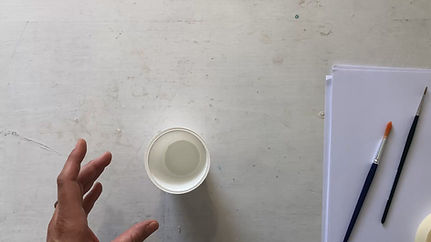
The transformed text was handwritten with a brush on white sheets using a mixture of pigments traditionally employed in painting to achieve flesh tones, as if to imprint onto the paper the memory of the body, the trace of shared skin. These sheets were then shredded and reduced to pulp, from which a single large handmade sheet was created. On this organic surface, dense with memory and physicality, the inscription ONE FLESH is engraved by hand.
.jpg)
The title, drawn from a biblical expression, evokes the profound fusion of two bodies, two beings, who through eros and the trust inherent in the act of love merge into an irreducible unity. The sensuality of the rewritten text is not overt, but emerges as an underground current: an intimate, vibrant language that explores surrender, desire, and reciprocity. The body becomes word and the word becomes body, in an artistic gesture that is at once writing, destruction, and rebirth.
One Flesh is an act of trust in the generative power of encounter, in the possibility that two identities, through contact, do not erase one another but blend, becoming new, indivisible matter. A silent hymn to eros as the primary language of soul and body—a ritual that unites, transforms, and inscribes.
Una sola carne è il risultato di un lungo processo di riscrittura e trasformazione del Cantico dei Cantici, uno dei testi più sensuali della Bibbia che celebra l’amore carnale e la passione tra due amanti.
Intervenendo sul testo originario, sono stati eliminati tutti i riferimenti a nomi propri e luoghi geografici, liberandolo dalle coordinate storiche e identitarie per restituirlo a una dimensione universale, astratta e atemporale. La parola resta nuda, svincolata dal tempo e dallo spazio, ridotta alla pura essenza del desiderio. Il testo è stato anche analizzato e ripreso da diverse bibbie di vecchie edizioni, alcune delle quali ritrovate nel 2018 in un ex convitto di Padri Gesuiti di Torino.
Incisione su carta fatta a mano
2025
Il testo trasformato è stato trascritto a mano con pennello su fogli bianchi utilizzando una miscela di pigmenti usati in pittura per ottenere l’incarnato, quasi a voler imprimere sulla carta la memoria del corpo, la traccia di una pelle condivisa. Successivamente, questi fogli sono stati tritati e ridotti in polpa, da cui è nato un unico grande foglio fatto a mano. Su questa superficie organica, densa di memoria e fisicità, è incisa a mano la scritta: UNA SOLA CARNE.
Il titolo, tratto da un’espressione biblica, evoca la profonda fusione tra due corpi, due esseri, che attraverso l’eros e la fiducia dell’atto amoroso si fondono in un’unità irriducibile.
La sensualità del testo riscritto non è esibita, ma affiora come una corrente sotterranea: un linguaggio intimo, vibrante, che esplora l’abbandono, il desiderio, la reciprocità.
Il corpo diventa parola e la parola diventa corpo, in un gesto artistico che è al tempo stesso scrittura, distruzione e rinascita.
Una sola carne è un atto di fiducia nel potere generativo dell’incontro, nella possibilità che due identità, nel contatto, non si annullino ma si mescolino, diventando materia nuova, indivisibile. Un inno silenzioso all’eros come linguaggio primario dell’anima e del corpo, un rito che unisce, trasforma, incide.